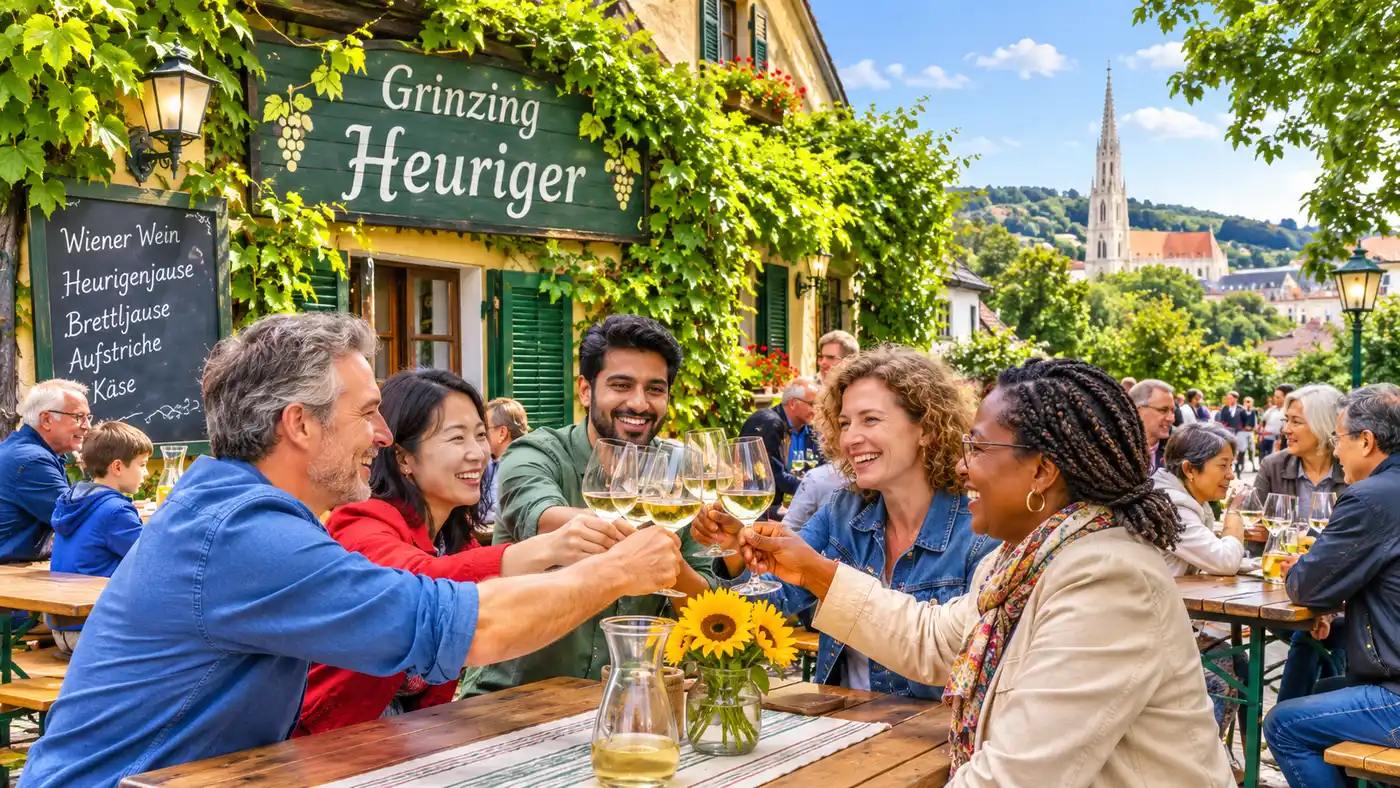
Best Grinzing Heuriger: Top Wine Taverns and Wineries
You can smell the woodsmoke and roasted pork long before you turn the corner onto Cobenzlgasse. Taking the 38 tram from Schottentor to the end of the line deposits you in what feels like an alpine hamlet, yet you are still technically within city borders. Finding a proper grinzing heuriger is not just about having a glass of cold white wine after a hot afternoon; it is about stepping into a ritual that has sustained Vienna for over two hundred years. Some courtyards feel sleepy and ancient with crumbling lime plaster and climbing ivy, while others have been polished until they shine for bus tours arriving on tight schedules.
Grinzing is easily the most famous corner of the Austrian capital for tavern culture. Nestled against the Vienna Woods in the 19th district, this historic pocket draws thousands of thirsty travelers and locals every week. Whether you want an unpretentious afternoon under an old chestnut tree, an authentic buffet piled high with homemade spreads, or a serious flight of local field blends, navigating the taverns here takes a little bit of insider knowledge. If you are wandering up through the cobblestones, this guide cuts through the tourist traps to show you where to sit, what to sip, and how to eat like someone who actually lives here.
Book your wine tasting vienna experience:
The Charm of the Grinzing Wine Village Vienna
The whole concept of a heuriger dates back to an imperial decree issued by Emperor Joseph II in 1784. He granted local vintners the legal right to serve their own newly harvested wine without having to buy an expensive restaurant license. That tiny piece of legislation created an entire subculture. The word itself comes from heuer, an Austrian-German word meaning "this year," referring specifically to the young vintage poured from rustic carafes straight out of local wooden barrels.
Grinzing was once an independent rural parish surrounded by steep hillsides. Even though Vienna absorbed it back in 1892, the architecture refused to change. The streets are lined with wide-arched entry gates, originally designed to let horse-drawn grape wagons pass straight from the vineyard through the house into the press house behind. When an authentic heuriger is open and serving its own vintage, vintners hang a bundle of fresh pine twigs - known locally as the Buschen - above the heavy front door, often accompanied by a small wooden board reading Ausg’steckt. If you see that green branch, you walk inside.
The terroir here is deeply weird in the best way possible. Vienna is the only world capital with significant, commercially viable vineyards operating inside its municipal boundaries. The cool drafts coming down from the heights of the Wienerwald bump straight into the warm air rolling off the Pannonian plains to the east. That collision gives Grinzing vienna wine its bright acidity and sharp aromatic profile. If you have already read our guide to visiting Grinzing: things to do in Vienna's wine village, you know that hiking down from the ridgeline straight into a tavern garden is the classic Sunday afternoon pilgrimage.
Note: True seasonal heurigen, known strictly as Buschenschanken, only open for several weeks a year based on a rotating municipal calendar. If a tavern serves full warm dinners year-round with wait service, it is legally operating as a regular restaurant, though locals loosely call them all heurigen anyway.
Top Grinzing Wine Taverns and Wineries to Visit
Picking the right door makes all the difference between an unforgettable evening under the stars and an overpriced platter surrounded by idling motorcoaches. The main drag has plenty of both. Here are the standout spots that continue to produce exceptional wine while preserving genuine hospitality.
Tucked into Cobenzlgasse, Martin Sepp Grinzing is one of the grand anchors of the neighborhood. The Sepp family has worked soil in these foothills since the 1600s, and the interior looks it, crammed with heavy oak tables, copper kettles, and tiled stoves. The leafy garden out back is massive, spread across staggered stone terraces that climb up toward the slope. Their Grinzing wine portfolio is reliably great, leaning into crisp Grüner Veltliner and refreshing Gemischter Satz. You order your drinks from your server at the table, but you walk up to the old glass-fronted counter inside to choose your hot meats and salads by weight.
A few doors down sits Heuriger Rudolfshof Grinzing, an absolute labyrinth of cozy parlors and sun-dappled courtyard nooks. Rudolfshof feels less hurried than some of its neighbors. It preserves that slightly worn, bohemian charm that once pulled 19th-century composers into these hills. The vine canopy overhead filters the late afternoon light into a warm green glow. Grab a corner table, ask for a carafe of the house white, and take your time browsing the cold platters.
For those who want a refined dining experience that honors traditional roots, Brandl Grinzing is a mandatory stop. Sometimes referred to as restaurant Brandl Grinzing, this tavern strikes a sweet balance between casual garden drinking and polished Austrian comfort food. While many Grinzing wine taverns stick entirely to self-service counters, Brandl puts serious effort into sit-down hospitality. Their Tafelspitz and seasonal wild game dishes rival the premier Grinzing vienna restaurants downtown, but you get to eat them in a quiet, tree-shaded courtyard surrounded by centuries-old stonework.
If you prefer an urban edge mixed with heritage, Weingut Grinzing operations dotting the adjacent lanes provide plenty of variety. Some venues feature live Schrammelmusik - traditional Viennese folk played on an accordion and a double-necked guitar - usually starting around 6:30 pm. When the musicians are talented, the melancholy, sweet melodies bouncing off the courtyard walls make the entire neighborhood feel paused in 1910.
| Tavern Name | Primary Vibe | Best For | Standout Pour | Average Glass Price |
|---|---|---|---|---|
| Martin Sepp | Sprawling, traditional, bustling | Terraced garden seating & warm buffet | Wiener Gemischter Satz DAC | €4.20 - €5.50 |
| Rudolfshof | Cozy, historic, romantic | Quiet courtyard conversations | Grüner Veltliner Alte Reben | €3.90 - €5.20 |
| Brandl | Polished tavern, culinary focus | Sit-down dinners & classic roasted meats | Riesling Nussberg | €4.80 - €6.50 |
| Zum Berger | Rustic, local, understated | Escaping tour groups on side streets | Hauswein (Carafe) | €3.50 - €4.50 |
Pro tip: Arrive between 4:00 pm and 5:15 pm on weekdays. You will beat the dinner rush, score the most shaded table under the arbor, and get first crack at the freshly roasted pork belly just coming out of the kitchen.
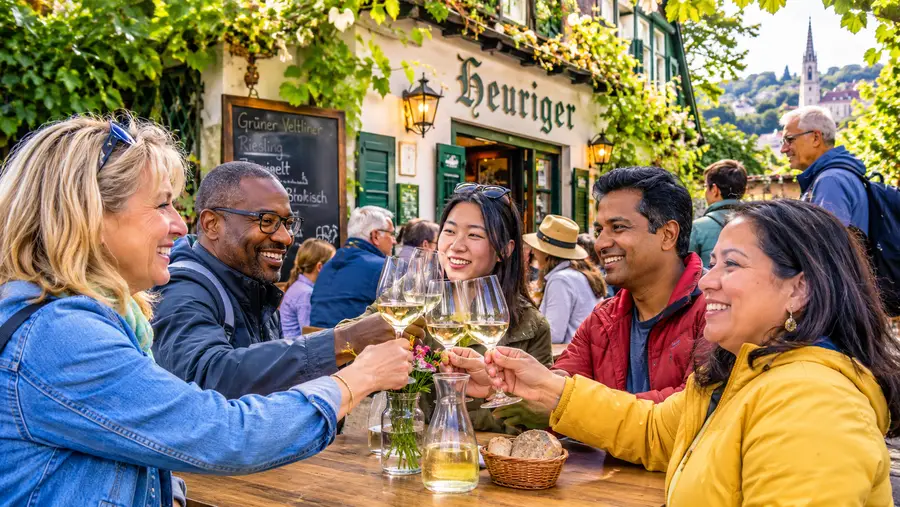
What to Eat: Grinzing Cheese, Buffets, and Rustic Classics
The food at a Grinzing heuriger vienna follows an old-school logic that catches some first-timers completely off guard. At almost every traditional tavern, drinks are ordered through the waitstaff at your table, but food is procured by standing up, walking to the buffet cabinet, and pointing at what looks tempting. A cook in an apron slices off slabs of meat and scoops salads right onto your plate, calculates the cost based on weight, and hands you a small paper slip to pay immediately or settle with your server later.
Do not skip the cold appetizer spread. The star of any bread basket here is the cheese selection. Viennese heurigen are famous for house-blended spreads, chief among them Liptauer, often billed simply on English chalkboards as traditional Grinzing cheese. It is an intensely savory blend of mild curd cheese (Topfen), butter, sharp sweet paprika, caraway seeds, minced capers, and onions. Spreading a thick layer of fiery orange Liptauer over dense, crusty sourdough rye (Bauernbrot) while sipping a bone-dry white wine is the quintessential tavern pairing.
When you are ready for warm, heartier plates, keep an eye out for these tavern staples:
- Schweinsbraten: Roast pork shoulder or belly with crackling skin, heavily scented with garlic and crushed caraway seeds, swimming in rich pan juices.
- Kümmelbraten: Pork belly with a thick, impossibly crisp layer of bubbly roasted skin, sliced thin or thick depending on how hungry you look.
- Erdäpfelsalat: Traditional Austrian potato salad tossed with beef broth, sweet mustard, oil, vinegar, and red onions; never mayonnaise.
- Krautwickler: Savory cabbage rolls stuffed with seasoned minced pork and rice, braised in a rich, tangy paprika-spiked broth.
- Topfenstrudel: Flaky pastry stuffed with sweetened quark cheese, served cold or lukewarm, perfect alongside black coffee.
Portions are generous and carbohydrates are unapologetically celebrated. If you are comparing Grinzing austria restaurants to places downtown, prices at the heuriger buffets are noticeably fairer. A hefty plate heaped with two cuts of meat, warm sauerkraut, a fist-sized bread dumpling, and potato salad usually tallies up around €14 to €18, leaving plenty of change for another round of carafes.
Book your wine tasting vienna experience:
Understanding Grinzing Vienna Wine: What to Drink
You cannot talk about wineries in this district without talking about Wiener Gemischter Satz. This is not a casual cuvée mixed in a cellar tank after fermentation. Instead, it is an ancient viticultural practice where a vintner plants at least three different grape varieties side by side in the very same vineyard plot. The grapes are harvested on the exact same morning and pressed together into a single tank.
By law, a certified Wiener Gemischter Satz DAC must contain at least three quality white varieties, with the largest share not exceeding 50 percent and the third share at least 10 percent. In Grinzing, a single glass might blend Grüner Veltliner for pepper and backbone, Riesling for electric acidity, Weissburgunder for body, and a splash of Traminer for floral aromatics. The result is complex, endlessly drinkable, and structurally forgiving. Bad weather might damage the Riesling, but the Veltliner thrives, guaranteeing that the vintage stays balanced.
If you want to arrange a formal grinzing vienna wine tasting, several producers offer structured flights inside their tasting cellars before you head out to the garden benches. You can also explore options through organized excursions like the best Vienna wine tours: guided tastings, bike and countryside trips, which often thread through these exact hillsides before finishing in Grinzing for a meal. For casual visitors, simply ordering a Viertel (a quarter-liter carafe) or an Achterl (an eighth-liter glass) of whatever is marked as the house specialty is the simplest way to sample the vintage.
On blistering summer afternoons, watch what the Viennese order. Nobody drinks heavy reds. Half the patio will be clinking tall glasses of G’spritzter, a dead-simple mix of equal parts white wine and sparkling mineral water. It is crisp, hyper-refreshing, and keeps your head clear enough to walk back down the hill.
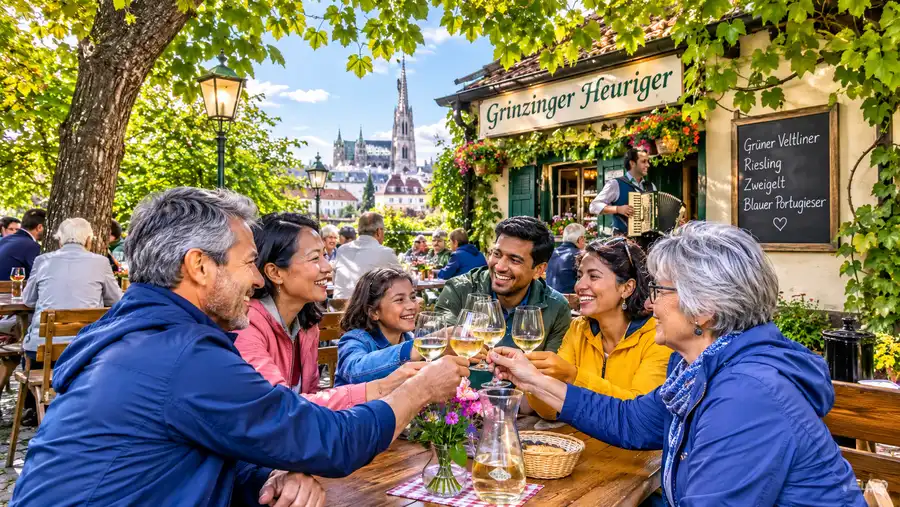
How to Plan Your Grinzing Wine Tour and Visit
Visiting a grinzing winery vienna requires very little logistical gymnastics. You do not need to rent a car, and you certainly should not drive here given Austria's strict 0.05% blood alcohol limits. Public transit drops you right at the mouth of the village.
To get the most out of your day, consider structuring your afternoon like this:
- Transit to the vineyards: Board the 38 tram at Schottentor in central Vienna. The ride takes about 25 minutes, winding past grand residential villas until it terminates at Grinzing square.
- Pre-dinner hike: Hop on bus 38A from the tram terminus up to Kahlenberg or Cobenzl. Walk the ridge paths through the vines for panoramic vistas of the Danube river basin, then wander down the trail back into town.
- Tavern hopping: Start your self-guided grinzing wine tour around 4:30 pm at an intimate spot like Zum Berger or Rudolfshof for a light glass, then transition to Martin Sepp or Brandl for your heavy dinner plate.
- Cash preparation: While larger establishments now take cards, smaller family taverns still operate cash-only registers at the buffet line. Keep about €30 to €40 in paper bills tucked away just in case.
Weekends in late September and October get manic. That is when the grapes are harvested and taverns pour Sturm, a cloudy, half-fermented grape juice that tastes like fizzy apple cider and sneaks up on you quickly. If you plan to visit on a Saturday during peak harvest, either book your outdoor table two weeks in advance or show up right when doors open at 3:00 pm.
Frequently Asked Questions about grinzing heuriger
What is the difference between a heuriger and a buschenschank?
A Buschenschank is a primitive, farm-based wine tavern permitted only to sell cold food and wine produced strictly on its own land during limited seasonal opening windows. A Heuriger, particularly within modern city limits like Grinzing, often holds a wider catering concession, allowing it to stay open throughout the year, serve hot cooked meals, and offer beer or soft drinks.
How do I know if a Grinzing heuriger is open?
Look for the Buschen, a small wreath or bundle of fresh pine or fir boughs hanging above the front entryway. If the branch is fresh and a light shines on the sign, the tavern is open for business. If the doorway is bare, the courtyard is closed for the season.
Do I need to make a reservation for wine taverns in Grinzing?
For groups of four or fewer on weekday afternoons, reservations are rarely needed. However, if you are visiting on a Friday or Saturday evening between May and October, or during the autumn Sturm season, booking a table several days in advance is highly recommended.
Quick Reference
- Transit: Tram 38 from Schottentor directly to Grinzing (25 minutes)
- Typical wine pour: 1/8 liter (Achterl) around €3.80 - €5.50
- Signature drink: Wiener Gemischter Satz DAC white field blend
- Food style: Cold & hot self-service buffet charged by weight
- Peak season: May to June (gardens) & September to October (harvest)
Book your wine tasting vienna experience:
The Bottom Line
Grinzing can easily feel like a theme park if you walk into the first flashy tavern bused by tour organizers, but real Viennese wine culture is alive and well here if you look for the pine bough over the archway. The clatter of heavy stoneware, the smell of roasted cumin on pork rind, and a cold tumbler of Gemischter Satz under an ancient lime tree cannot be faked. Skip the crowded city center restaurants for one evening, ride the 38 tram to its terminus, and spend three slow hours getting lost in the back courtyards of the Wienerwald foothills.
Read more about wine tasting vienna.